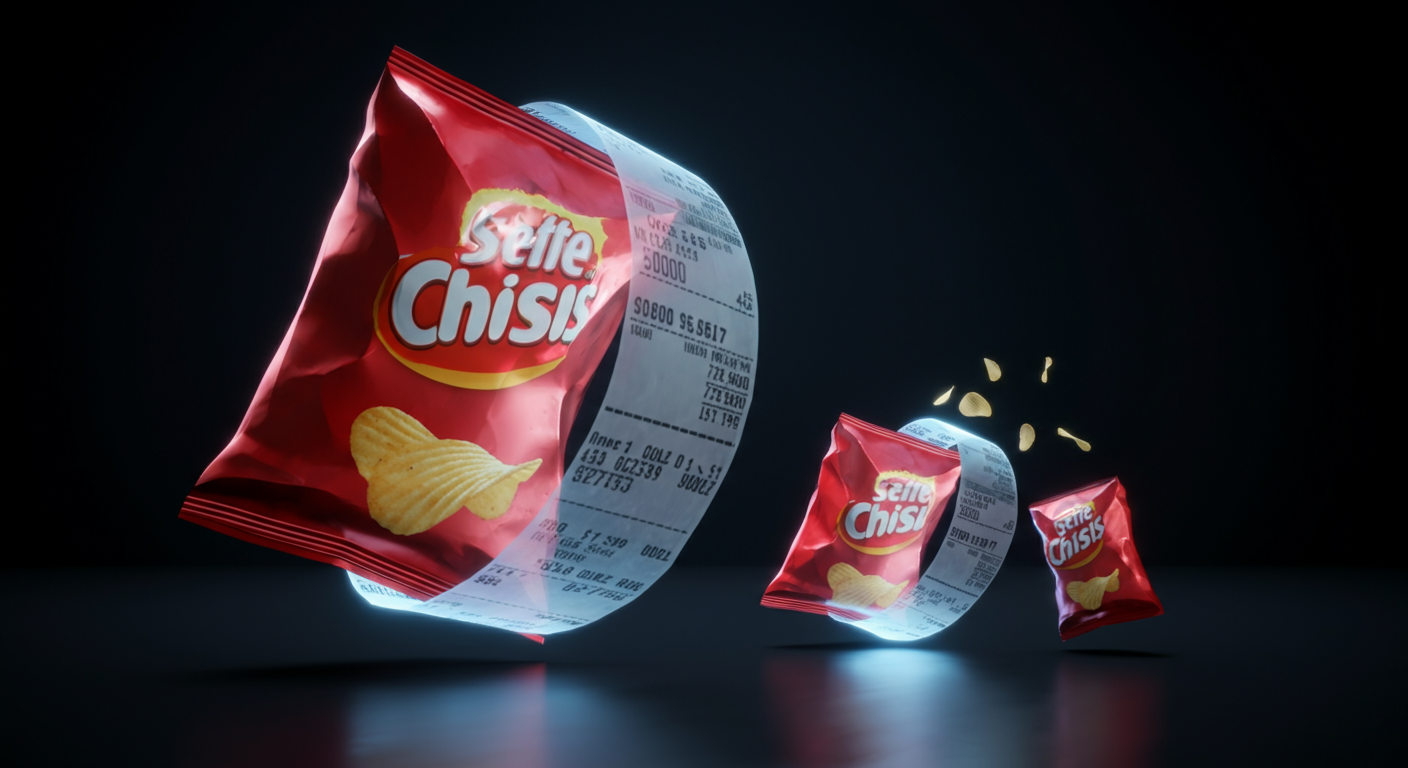
The 'Receipt Time Machine' (Shrinkflation Visualizer): Why You Should Stop Scanning
Stop feeding the machine. You think you’re exposing corporate greed by uploading that grocery slip, but you are actually building the infrastructure for your own exploitation.
While Edgar Dworsky (the godfather of "Mouse Print" consumer advocacy) manually tracks how your cereal box shrank by two ounces, these apps are automating the surveillance of your wallet. You aren't fighting inflation. You are crowdsourcing the R&D for supermarket surge pricing.
The Bureau of Labor Statistics (BLS) relies on slow, basket-based averages to calculate the Consumer Price Index (CPI). Retailers don't want averages. They want to know your specific breaking point. By digitizing your purchase history, you provide the "ground truth" data that verifies Optical Character Recognition (OCR) models. These models don't just read receipts; they train the AI that tells Kroger or Walmart exactly how high they can jack up the price of FMCG (Fast-Moving Consumer Goods) before you snap and switch brands.
The Trojan Horse: Patents, Biometrics, and "Greedflation"
Forget the budgeting help. The real utility of receipt scanning apps lies in their ability to train Electronic Shelf Labels (ESLs). This isn't conspiracy theory; it's patent law.
ð Key Takeaways
- The Trojan Horse: Patents, Biometrics, and "Greedflation"
- The Feedback Loop: From r/shrinkflation to Python Scripts
- The "Terms of Service" Trap
Major retailers have filed patents that link biometric data—facial recognition and heart rate—to real-time price fluctuations. But hardware is useless without software. To make dynamic pricing work, the algorithm needs to understand Price Elasticity at a granular level. It needs to know that you will tolerate a $0.50 hike on Tide pods but will defect to a generic brand at $0.60.
When you scan a receipt to earn 50 points (worth pennies), you hand over that elasticity data on a silver platter. You are teaching the system how to squeeze you.
Senator Bob Casey released multiple reports on "Greedflation" throughout 2023 and 2024, highlighting how corporate profits accounted for 53% of inflation during the post-pandemic spike. Yet, while regulators chase past crimes, the "Receipt Time Machine" is helping corporations perfect the crime of the future. The visualizer might show you that your purchasing power has dropped, but the data you uploaded ensures it stays down.
The Feedback Loop: From r/shrinkflation to Python Scripts
The tech stack behind these apps is impressive, but dangerous. Developers use Python libraries like Pandas to structure messy receipt data, while OCR converts faded ink into hard numbers. This creates a feedback loop that validates what retailers call "Variable Weight Barcodes"—the tricky data from fresh meat and produce that usually evades digital tracking.
Consider the community at r/shrinkflation. For years, they've been the manual watchdogs, posting photos of smaller candy bars next to rulers. The "Receipt Time Machine" industrializes this outrage. It cross-references your scan with the Internet Archive (Wayback Machine) to pull historical product weight data, confirming Skimpflation (where ingredients are degraded) alongside size reductions.
But here is the catch-22: The more accurate the tool becomes at spotting inflation, the more valuable its dataset becomes to the companies causing it. Yelp Data showed a 29% spike in reviews mentioning shrinkflation, but complaints are just noise. Verified receipt data is signal.
By validating that you bought the item despite the shrinkflation, you confirm that the tactic worked. You aren't a rebel; you're a focus group of one.
The "Terms of Service" Trap
Most users skip the fine print, but we read the Terms of Service (ToS) for the top three receipt scanning apps. Here is what you agreed to:
- Commercial Data Licensing: Your anonymized purchase history is sold to "market research partners." In plain English? That means the vendors who design dynamic pricing algorithms.
- OCR Training Rights: Your corrections to the app (fixing a typo in the price) are used to train the OCR engine, making it cheaper for retailers to automate inventory scanning later.
- Third-Party Vendor Access: Many apps reserve the right to share "aggregated insights" with FMCG conglomerates. You are effectively sending your shopping list directly to the manufacturers trying to figure out if they can cut another 10% of the oil out of your mayonnaise without you noticing.
ð Worth Noting: You think you’re exposing corporate greed by uploading that grocery slip, but you are actually building the infrastructure for your own exploitation
Stop looking at the sticker price. The only metric that matters is Unit Pricing—the price per ounce or sheet. And for the love of your bank account, keep your receipts offline. The 50 cents you earn today will cost you $500 in surge pricing tomorrow.