We show you five images. If you recognize number four, your attention span is officially cooked.
In 2004, the average screen focus lasted 2.5 minutes. By 2023, Dr. Gloria Mark confirmed that metric had cratered to 47 seconds. But the collapse of our collective concentration isn't just a psychological crisis or a parenting failure; it is an economic sorting mechanism.
Welcome to the Cognitive Caste System.
We are tracking the emergence of a biological class divide where 'Deep Focus' becomes a luxury good. This split separates the executive class from the algorithmically subdued. While competitors wring their hands over "screen time," the market is quietly pricing in your inability to look away.
The 'Brain Rot Terminality Index' predicts your future earning power based on a single variable: your resistance to the dopamine feedback loop. Are you the operator, or are you the feed?
The Race to the Bottom of the Brain Stem
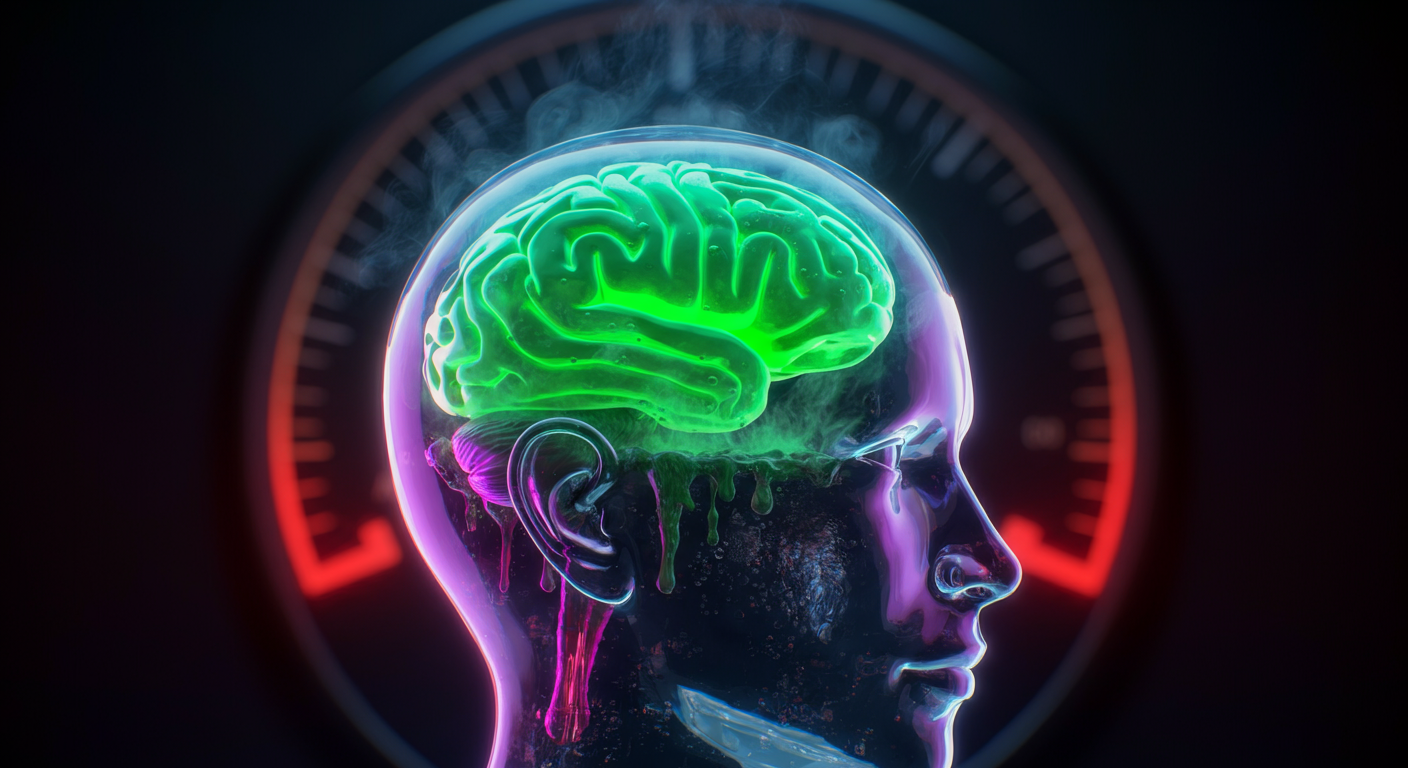
While parents panic over slang they don't understand, the labor market is preparing for a catastrophic devaluation of human capital. "Brain rot" isn't just a meme; it's the colloquial term for a brain that has been rewired by a Variable Ratio Schedule.
ð Key Takeaways
- The Race to the Bottom of the Brain Stem
- From 'iPad Kid' to 'Skibidi' Casualty
- The Calculus of Terminality
- Escaping the Cognitive Proletariat
This is the same mathematical model used in slot machines. ByteDance didn't accidentally create the most addictive app in history; they engineered a dopamine feedback loop that hunts for your specific vulnerabilities. The Center for Humane Technology calls this the "race to the bottom of the brain stem." The goal isn't enjoyment. The goal is to extract attention until the user enters a state of passive compliance.
The result? A workforce of "Cognitive Proletariats." These are workers whose neural pathways are so calcified by short-form loops that they physically cannot engage in the deep work required for high-leverage decision-making. If you need a new hit of stimulation every 47 seconds, you aren't just distracted. You are unemployable in a high-wage economy.
From 'iPad Kid' to 'Skibidi' Casualty
The rot doesn't happen overnight. It follows a specific developmental pipeline that our Index tracks with alarming accuracy.
It starts with the "iPad Kid" phenomenon—toddlers pacified by screens at dinner tables, bypassing the development of self-soothing mechanisms. By age 10, the petri dish is Roblox. Here, users are incubated in a chaotic, micro-transaction-heavy ecosystem where attention is currency.
By the teen years, this manifests linguistically. When we analyze the rise of Kai Cenat and the explosive popularity of terms like "rizz," "gyatt," or "fanum tax," we aren't looking at standard generational slang. We are looking at the vocabulary of parasocial interaction. Users are adopting the performative, high-energy, disjointed speech patterns of streamers because that is their primary social input.
The terminal stage is "Skibidi Toilet" syndrome. Critics dismiss it as trash, but it’s actually Dadaist absurdist humor for a generation raised on algorithmic chaos. It makes no sense because the algorithm doesn't require sense; it requires engagement. If you score high on the Terminality Index, your brain no longer demands narrative coherence—it just demands the next flash of light.
The Calculus of Terminality
The "Brain Rot Terminality Index" operates as a predictor of economic viability. Jonathan Haidt, author of The Anxious Generation, connects the mass adoption of smartphones to a collapse in youth mental resilience. Our Index takes Haidt’s data and projects it forward into the boardroom.
With 95% of teens plugged into the matrix, the "sovereign" elite who can maintain focus will face zero competition. Corporate headhunters are already adapting. By 2028, expect elite employers to implement "Focus Endurance" screening alongside IQ tests. They won't care if you know the answer; they will test if you can sit still long enough to find it without checking a notification.
The "Terminality" threshold in our index marks the biological point of no return. This is where short-form content addiction crosses into digital dementia—where the brain stops allocating metabolic energy to long-term memory formation because it trusts the device to remember for it.
ð Worth Noting: But the collapse of our collective concentration isn't just a psychological crisis or a parenting failure; it is an economic sorting mechanism
Escaping the Cognitive Proletariat
If attention is the new oil, you are leaking equity every time you scroll. Here is how to secure your position in the sovereign class.
- Install Hardware Friction. Willpower is a finite resource; the algorithm is an infinite math equation. You will lose. Buy a physical timed lockbox (like a K-Safe). You must physically remove the option to check your device during deep work.
- Audit with Common Sense. Use Common Sense Media guidelines not just for kids, but to audit your own consumption. If the content you consume lacks a narrative arc longer than 60 seconds, cut it.
- Reject Algorithmic Radialization. The TikTok algorithm wants to silo you into extreme niches to keep you watching. Manually reset your feed preferences weekly. Force the machine to serve you boring content. Boredom is the only way to regrow your attention span.