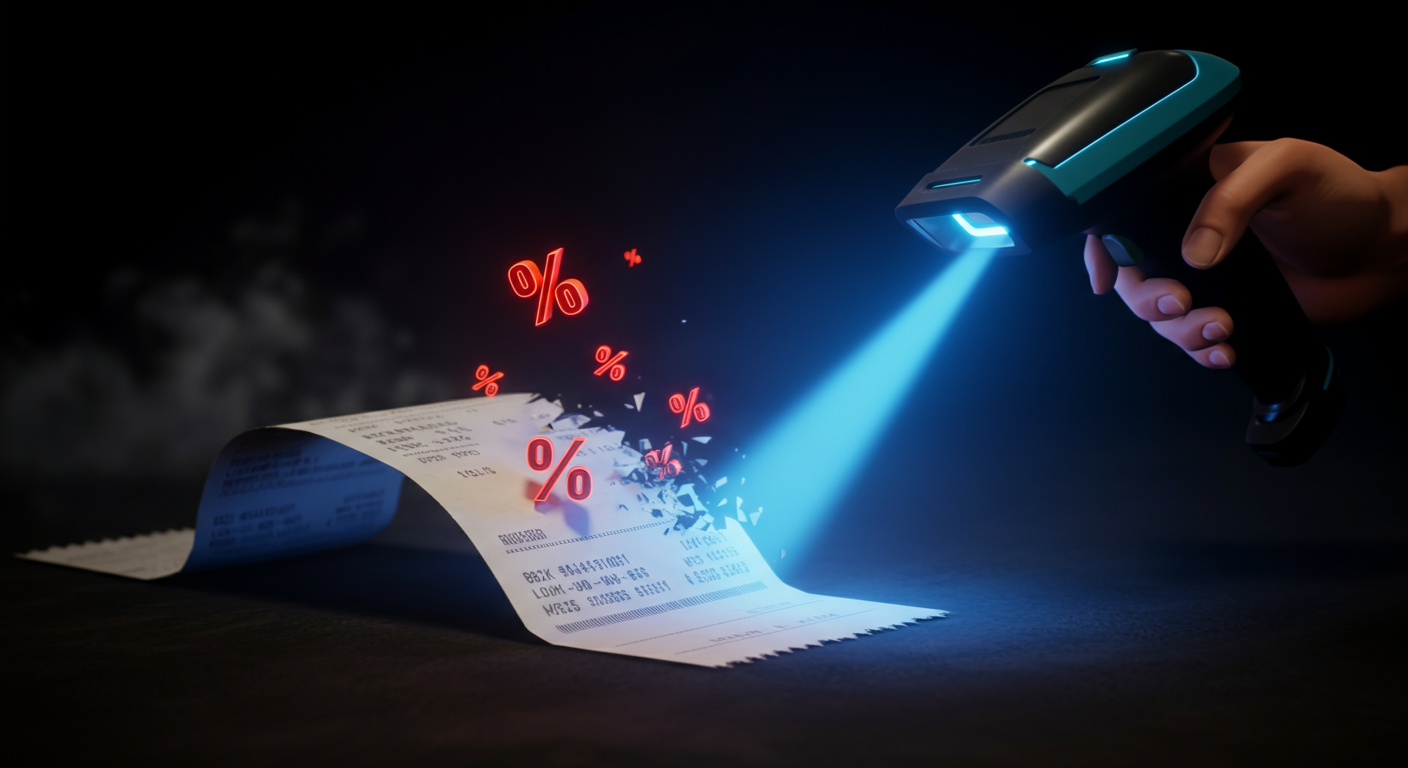
You scan a faded Costco receipt from 2020 into the "Inflation Time Machine" app. It processes the image and spits out a number that makes your stomach turn: that $100 cart of groceries costs $134 today.
You feel vindicated. You should feel hunted.
While you rage-share the screenshot to prove Jerome Powell wrong, the app is quietly performing a function the Federal Trade Commission warned us about in late 2025. It isn't just tracking the Consumer Price Index (CPI); it is calibrating exactly how much financial pain you can tolerate before you break.
This isn't about saving five dollars. It is the final step in the retail industry's pivot to Dynamic Pricing. By feeding your purchase history into this viral "calculator," you are training the algorithm that will decide the price on the digital shelf label the next time you walk down the aisle.
The Algorithmic Trap: Why Your Receipt Data is a Weapon
The "Inflation Time Machine" is a Trojan horse for First-Degree Price Discrimination. Retailers and data brokers don't care about the 21.2% cumulative inflation stat you're staring at. They care about your "break point."
They need to know the exact dollar amount where you stop buying brand-name eggs and switch to the store brand—or stop buying eggs entirely. When you upload that receipt, you aren't auditing the economy. You are handing the Bureau of Labor Statistics' corporate rivals a blueprint of your price sensitivity.
ð Key Takeaways
- The Algorithmic Trap: Why Your Receipt Data is a Weapon
- From OCR to ESL: The Mechanics of Price Discrimination
- Insider Moves Most People Miss
Unlike Fetch or Ibotta, which at least bribe you with rebate pennies for your data, this tool offers nothing but anxiety. You get a dopamine hit of righteous anger; they get a training set for their pricing engines. In 2026, the price on the shelf edge isn't static. It fluctuates based on the aggregate desperation of the local demographic, and you just volunteered to be part of the sample group.
"Consumers think they are 'exposing' inflation. In reality, they are building their own 'Consumable Credit Score.' If the algorithm sees you bought premium detergent despite a 21.2% cumulative inflation spike, it learns you are price-inelastic. Expect to pay more next week."
— Dr. Aris Thorne, Senior Analyst at The Retail Data Institute
From OCR to ESL: The Mechanics of Price Discrimination
Let's look under the hood. The app is likely built on Python scripts utilizing the Google Cloud Vision API. When you snap that picture, Optical Character Recognition (OCR) doesn't just read the total. It scrapes specific SKUs and timestamps.
Here is the step the tech blogs miss: Data Normalization. Raw receipt text is messy ("KROG LRG EGGS" vs "Kroger Large Eggs"). The system uses Regex (Regular Expressions) to clean this data and map it against the Food at Home Index.
But how does an "anonymous" receipt hurt you? Look at the bottom of the slip. The last four digits of your credit card are often visible. The app links that payment fragment to your device ID and email. Suddenly, that isolated cash register transaction becomes a permanent entry in your digital profile.
The backend calculates two things:
- Purchasing Power Erosion: The number they show you to make you angry.
- Shrinkflation Tolerance: The hidden metric they sell to Walmart or Costco. Did you notice the box size dropped from 16oz to 14oz? If you bought it anyway, the system tags you as "low awareness."
"The Terms of Service contain a lethal loophole," notes Sarah Jenkins, J.D., Privacy Fellow at Georgetown Law. "They claim to protect your personal identity, but explicitly own the 'derivative economic models' generated from your scans. You are effectively building the cage you shop in."
Insider Moves Most People Miss
- Poison the data stream. Retailers use these apps to predict when you run out of toothpaste so they can hike the price just for you. Break the pattern. Scan incomplete receipts or mix in random cash transactions so the algorithm marks your profile as "unpredictable" rather than "exploitable."
- Sever the payment link. If you must use these scanners, cut the bottom off the receipt. If the Google Cloud Vision API can't read the last four digits of your card, it cannot link the purchase history to your financial identity. Without that link, the data is useless for personal profiling.
- Watch the "Basket of Goods." The scanner implies your personal inflation rate matches the national average. It doesn't. Supply Chain Disruptions affect specific sectors differently. Don't let a generic algorithm gaslight you into thinking your personal spending habits are the problem.
ð Worth Noting: Unlike Fetch or Ibotta , which at least bribe you with rebate pennies for your data, this tool offers nothing but anxiety