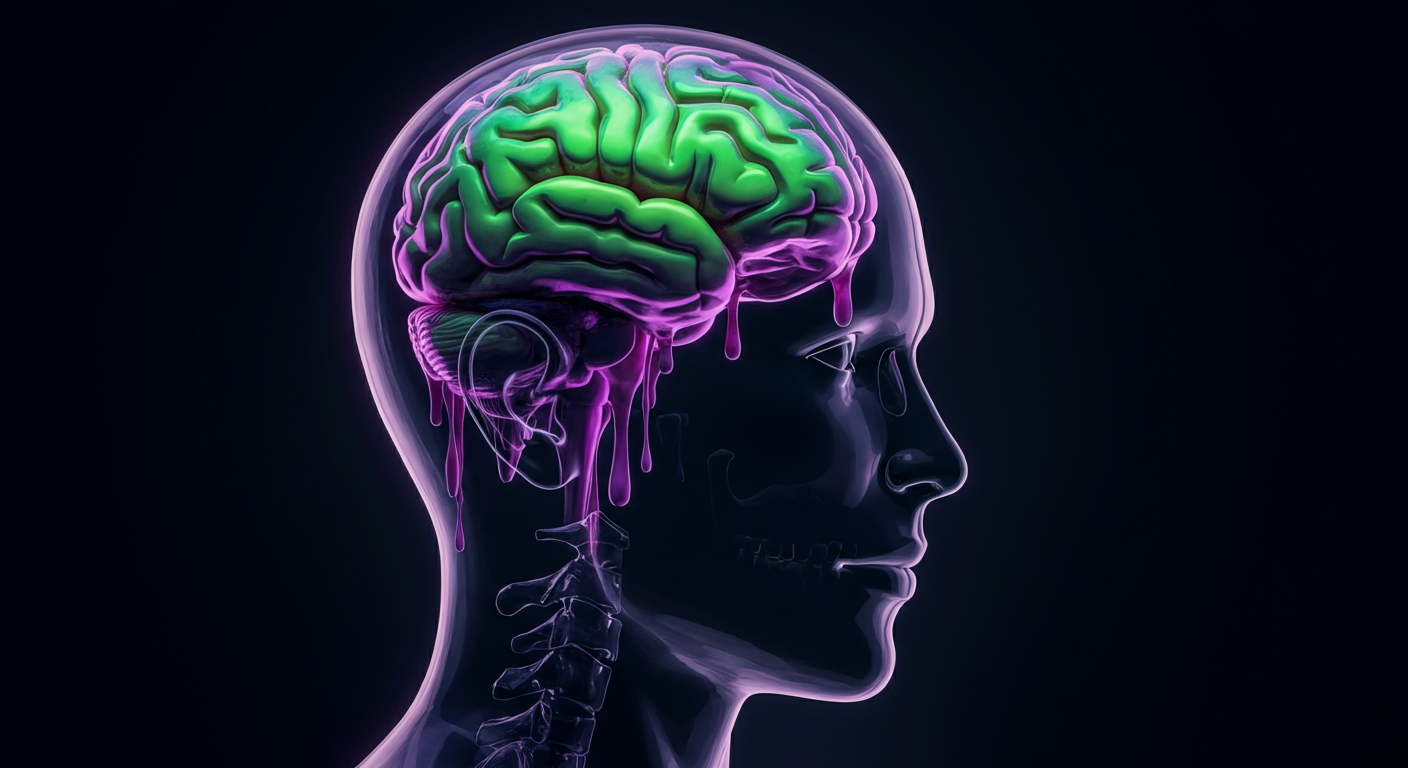
The 'Brain Rot' Toxicity Audit
Your vocabulary is shrinking. You struggle to finish paragraphs without skimming. According to Dr. Gloria Mark at UC Irvine, your screen attention span has cratered to 47 seconds. That isn't a quirk; it’s a neurological injury.
While you doomscroll, the TikTok Recommendation Engine is exploiting Dopamine Prediction Error—the brain's glitchy response to unpredictable rewards—to keep you hooked. You aren't just wasting time; you are systematically training your brain to reject the deep work required for high-paying careers. You are giving yourself "Terminal Internet Brain."
Recruiters know it. They hear the "brain rot" slang slipping into your interview answers. They see the garbage you amplify on your "Reposts" tab. Data brokers are even starting to profile candidates based on what they watch, selling your consumption habits as a proxy for cognitive endurance. It’s time to audit the damage before you make yourself unemployable.
The Literacy Recession
Stop treating "brain rot" as a Gen Z punchline. It is an economic solvency issue. If you cannot parse a dense strategy document because your brain is screaming for a subway surfer clip, you are functionally illiterate in a corporate setting. This fragmentation violates Cognitive Load Theory. Your working memory is flooded with low-value noise, making it biologically impossible to retain complex information. This isn't an accident. It is the result of platform enshittification—a term coined by Cory Doctorow to describe how tech giants degrade user experience to maximize ad revenue. They fracture your focus because a distracted brain buys more than a focused one."We are witnessing a race to the bottom of the brain stem. The economy values deep work, but the tools we use to participate in that economy are designed to destroy it." — Tristan Harris, Center for Humane TechnologyThe danger isn't internal anymore. Advertisers use tools like DoubleVerify and Integral Ad Science to avoid placing ads next to toxic "brain rot" content. Now, employers are applying similar logic to you. Through Algorithmic Profiling, data brokers sell "consumption profiles." If your digital footprint shows you spend four hours a day watching "NPC streams" or rage-bait, algorithms tag you as a high-risk candidate with low cognitive stamina.ð Key Takeaways
- The Literacy Recession
- The "Repost" Trap and Slang Bleed
- Remediation: Breaking the Loop
The "Repost" Trap and Slang Bleed
Most professionals know better than to post controversial content. But they forget the "Reposts" tab. On platforms like TikTok and X, your reposts are public by default, creating a "Shadow Resume" that recruiters increasingly scrutinize. This is where the distinction between "Cringe" and "Toxic" matters. A recruiter won't reject you for liking a harmless meme. But the "brain rot" pipeline often funnels users from absurd humor into misogynistic or extremist content via Algorithmic Amplification. If you mindlessly repost a clip because the first three seconds were funny, but the last ten were toxic, you own that toxicity. Then there is "Slang Bleed." Jonathan Haidt, author of *The Anxious Generation*, argues that the shift to phone-based childhoods has rewired social interaction. This manifests in the boardroom as an inability to code-switch. We see candidates dropping terms like "cooked," "rizz," or "bet" in cover letters or during salary negotiations. It doesn't make you sound relatable; it makes you sound like a liability.The Toxicity Audit Protocol
ðThe Cognitive Endurance Test Open a physical book or a long-form article (2,000+ words) related to your industry
You need to know if your brain is cooked. Here is the test.
1. The Cognitive Endurance Test
Open a physical book or a long-form article (2,000+ words) related to your industry. Set a timer. Read for 20 minutes without touching your phone.
The Fail State: If you check notifications, tab away, or realize you’ve read the same paragraph four times, your deep reading endurance is shot. You are suffering from Short-form Content Addiction.
2. The "For You" Forensic Analysis
Open your primary feed (TikTok, Reels, Shorts). Scroll for exactly 60 seconds. Count the ratio of "Narrative Content" (stories with a beginning, middle, end) vs. "Stimulus Loops" (dancing, screaming, random chaos).
The Fail State: If your feed is 80% stimulus loops, the algorithm has profiled you as a "reptile brain" consumer. It feeds you what you tolerate. If you want to change your profile, you have to starve the algorithm. Stop watching.
3. The Slang Audit
Ctrl+F your sent emails and Slack logs for these red flags: vibes, cooked, bet, cap, sus, ohio, sigma.
The Fail State: Finding these in peer-to-peer chat is one thing. Finding them in emails to management or clients is a career death sentence. It signals a lack of executive presence.
ð Worth Noting: The economy values deep work, but the tools we use to participate in that economy are designed to destroy it