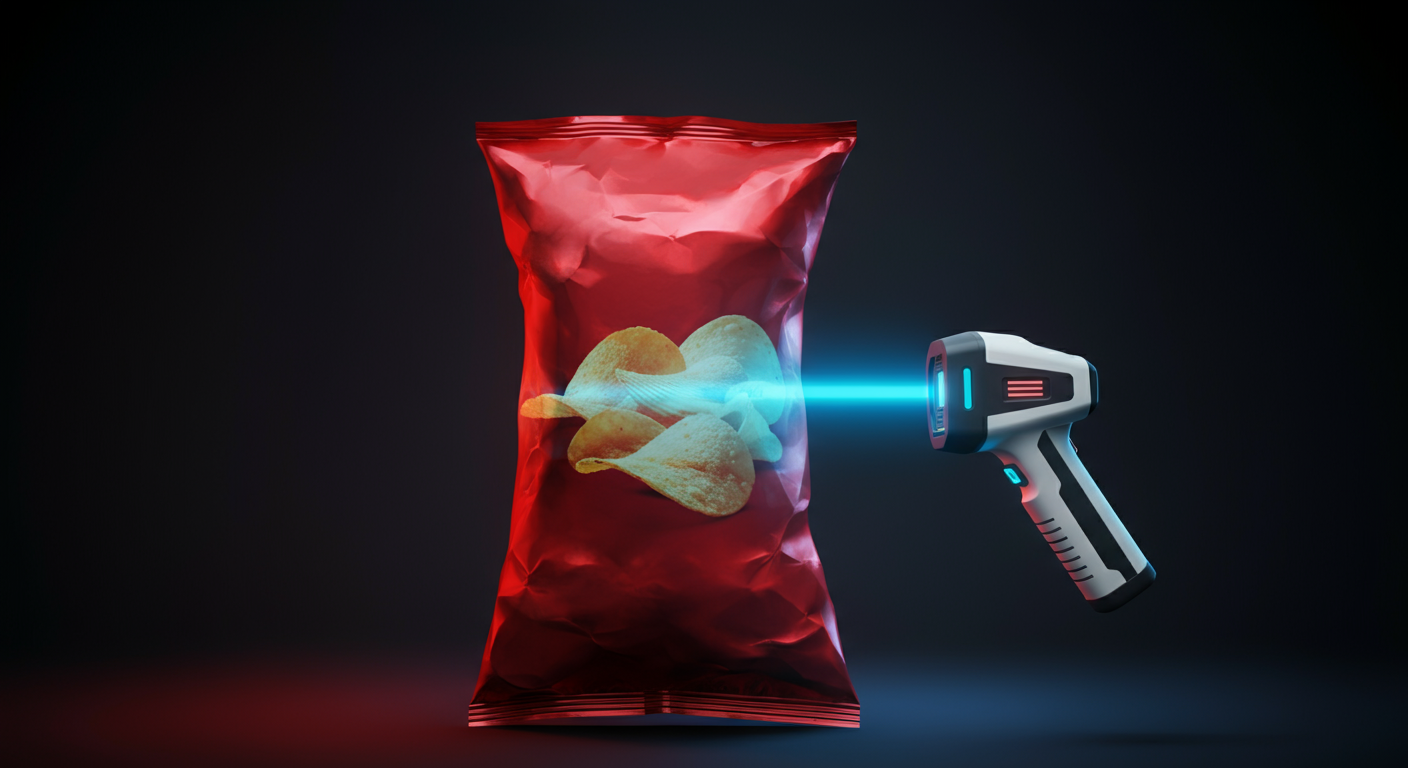
You aren’t imagining it. That bag of chips really is lighter than it was last year.
According to Morning Consult Data (2024), over 80% of Americans have sensed this phantom theft, but manufacturers are betting against your memory. They know you can’t recall the exact gram count of a toothpaste tube from 2022. They are wrong.
The evidence of the crime isn't in the bag; it’s hidden in the black-and-white stripes on the back.
While brands rely on packaging art to mask "skimpflation," they cannot lie to the global supply chain. To change a product's weight, they often must alter the Global Trade Item Number (GTIN). This is your loophole.
By using tools like Open Food Facts to audit these barcode shifts, you can bypass the marketing gaslighting and see the exact moment 15% of your product vanished.
The GTIN Reset: Why Visual Detection Fails
Your tactile sense is useless against industrial engineering. You cannot distinguish between 16 ounces and 14.5 ounces when the cardboard dimensions stay the same. While you focus on the "New Look!" label, the real heist happens in the metadata.
Here is the trick nobody discusses: the barcode "hard fork." When a manufacturer decides to protect Corporate Profit Margins, they rarely just reduce the net weight on the existing SKU. Instead, they issue a new Global Trade Item Number (GTIN). This digital reset severs the product's link to its historical Unit Pricing in the retailer’s database. To the store's inventory algorithm, the 14.5-ounce bag isn't a shrunken version of the 16-ounce bag—it is an entirely "new" product with no price history to compare against.
ð Key Takeaways
- The GTIN Reset: Why Visual Detection Fails
- Forensics of the GTIN Reset: The Supply Chain Smoking Gun
- Insider Moves Most People Miss
"The barcode change is the quietest alarm in the grocery store. It effectively wipes the memory of the shelf tag, allowing a 15% price hike to masquerade as a new inventory arrival." — Edgar Dworsky, Founder of Mouseprint.org
Edgar Dworsky has spent decades documenting these shifts before they hit the news. His work highlights a gap in official data: the Bureau of Labor Statistics (BLS) attempts to track weight changes, but often lags behind. By the time the Consumer Price Index (CPI) catches up to these adjustments, your budget has already bled out. If you aren't tracking the UPC, you aren't seeing the theft.
Forensics of the GTIN Reset: The Supply Chain Smoking Gun
Economist Pippa Malmgren helped popularize the term "shrinkflation" to describe this specific phenomenon: goods get smaller, but the price stays the same. It is a stealth tax. But unlike inflation, which is abstract, shrinkflation leaves a physical trail.
Under GS1 global standards, a significant change in "Net Weight" typically forces the creation of a new GTIN to prevent inventory corruption. When a brand shaves 1.5 ounces off a cereal box, they trigger a "GTIN Reset." The artwork stays identical to fool your eye, but the database ID shifts.
This creates a paper trail you can follow. Senator Bob Casey used aggregate data to release his "Greedflation" reports in 2023, exposing how corporations padded margins under the guise of Supply Chain Constraints. You can do the same thing on a micro level using your smartphone.
Here is how to turn your phone into a scanner for corporate theft:
- Scan the UPC: Use the Open Food Facts app. It is an open database, not a marketing tool.
- Audit the Timestamp: Look for the "Date Added" or "First Seen" metadata. If a staple product like a standard bag of Doritos has a barcode entry created in the last six months, that is a red flag. A classic product should have a barcode history going back years.
- Check the Crowd: Cross-reference with r/shrinkflation. This subreddit acts as a crowdsourced detection engine, often spotting the "new barcode, lower weight" trick weeks before official news outlets.
- The Amazon Method: For online goods, paste the URL into CamelCamelCamel. If a product's price history suddenly stops and a "newer version" appears at the same price point, check the weight. A broken price history often signals a new ASIN (Amazon Standard Identification Number) created to hide a downsize.
Distinguish this from Skimpflation, where the barcode remains the same, but the ingredient list shifts—replacing olive oil with sunflower oil. For pure Shrinkflation, the barcode is the confession signed by the manufacturer.
ð Worth Noting: According to Morning Consult Data (2024) , over 80% of Americans have sensed this phantom theft, but manufacturers are betting against your memory
Insider Moves Most People Miss
- Track the "GTIN Reset." Don't rely on your memory of box sizes. If the last digit of the barcode (UPC) changes, the weight almost certainly dropped. Manufacturers must assign a new number when net contents shift.
- Watch the Water. For canned goods, check Net Weight vs. Drained Weight. A sneaky tactic is to keep the net weight (total contents) the same but increase the brine or water, reducing the actual amount of beans or tuna you get.
- Ignore the Bold Price. The bold price on the shelf is the lie. The Price Per Ounce/Gram in the corner is the truth. That is the only number that accounts for the missing volume.