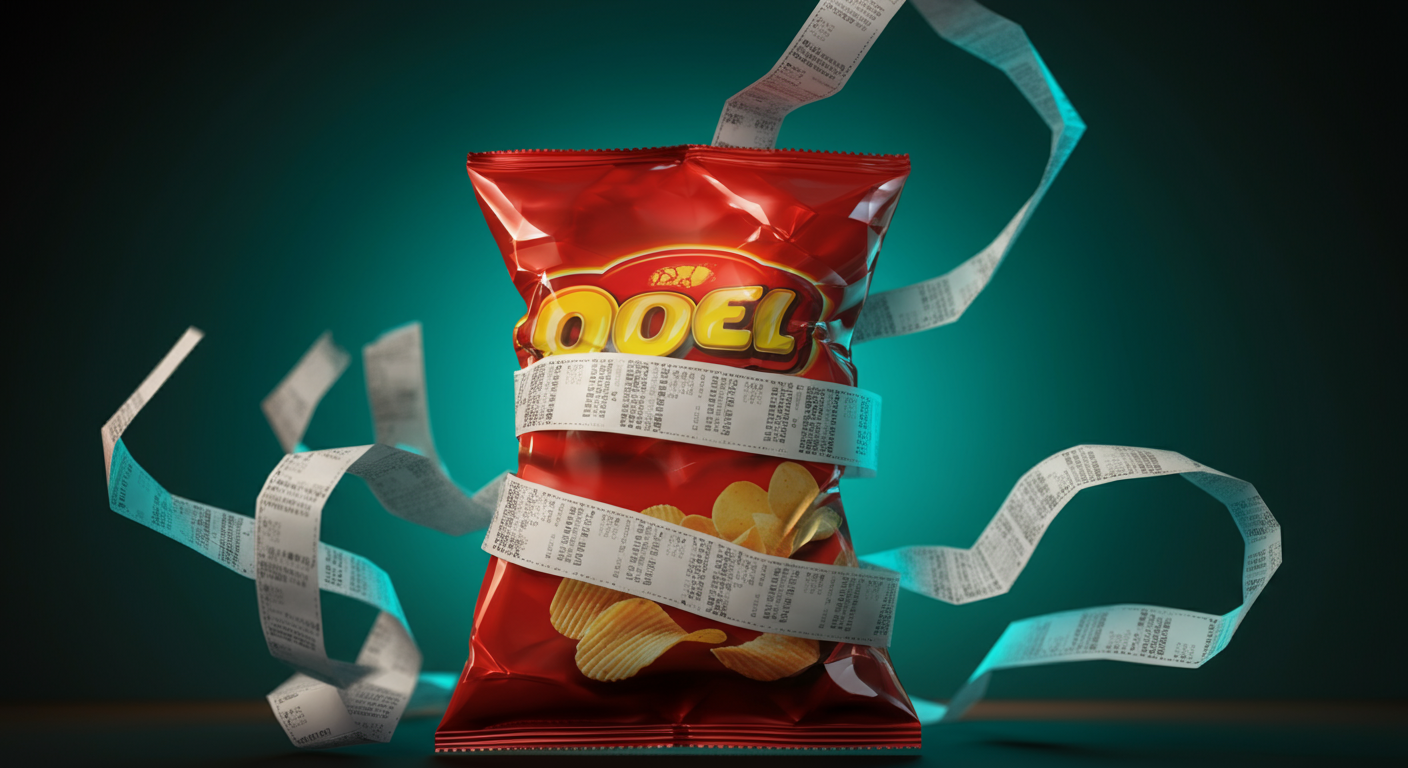
Stop shaking the bag. You aren’t imagining the empty space; you are holding evidence of a crime scene.
According to Edgar Dworsky, founder of Consumer World and the guy who has been tracking package downsizing since the 80s, that lighter package isn't an accident. It's a heist. But before you burn an effigy of the snack food executive, you need to understand the invisible war happening behind the shelves. We call it the "Retailer Ultimatum."
While the internet screams about corporate greed, the pressure often starts with the store, not the brand. Big Box giants impose strict "Price Ceilings"—contracts that forbid brands from crossing psychological lines like $4.99. When costs rise, the brand faces a nasty choice: shrink the product or get kicked off the shelf.
The Bureau of Labor Statistics (BLS) is too slow to catch this. Their CPI data lags months behind shelf changes, meaning official inflation numbers miss the calories being stolen from your pantry right now. The only variable left to hack is the Net Weight.
We generated a forensic "Robbery Receipt" for five pantry staples. It proves exactly how much food was stolen to keep that price tag frozen.
ð Key Takeaways
- The Retailer Ultimatum: Why $4.99 is a Trap
- How to Audit Your Grocery Bill (The Robbery Receipt)
- Tools to Fight Back
The Retailer Ultimatum: Why $4.99 is a Trap
Here is the uncomfortable reality most "inflation experts" miss: Retailers hold the lease on the shelf, and they play dirty.
Retail buyers tell suppliers, "This SKU stays at $4.99." They know that crossing into $5.00 territory triggers a massive drop in sales because of Elasticity of Demand. Basically, you stop buying when the number looks scary. When cocoa futures hit record highs, brands like Mondelez International can't just raise the price of Oreos. If they break the price ceiling, the retailer might delist them.
So, they call in the engineers.
The brand reverse-engineers the product weight to fit the price. They shave off 1.5 ounces—just enough to keep the margin alive but small enough that you might not notice until you get home. This keeps the retailer happy, but it screws you.
There is a darker motive here, too: The Private Label Trap. Retailers love it when national brands shrink. Why? Because their own "Great Value" or "Kirkland" versions sit right next to the shrunken name brand, suddenly looking like a massive bargain. Retailers pressure national brands to downsize, then use that weakness to sell you their own store brand. It’s not just inflation; it’s competitive sabotage.
This isn't to say the brands are innocent. Senator Bob Casey has released multiple reports on "Greedflation," showing that corporations are using inflation as air cover to jack up profit margins. But the mechanism of how they do it—the shrinking bag—is often a requirement to stay in the store.
How to Audit Your Grocery Bill (The Robbery Receipt)
You can't trust the packaging. The front of the bag is marketing; the truth is hidden in the Mouse Print—that tiny text on the back where the new net weight is buried. If you want to catch them in the act, you need to run your own audit.
The modern town square for this outrage is r/shrinkflation, where users upload photos of "Family Size" bags that are smaller than last year's "Regular Size." But photos aren't proof. Here is how to get the data:
1. The Wayback Machine Trick
Don't guess what the bag used to weigh. Prove it. Go to the Wayback Machine (Internet Archive) and search for the product page on Walmart.com or Target.com from two years ago. You will see the old Net Weight listed in the specs. Compare it to the bag in your hand. That difference is the theft.
ð Worth Noting: But before you burn an effigy of the snack food executive, you need to understand the invisible war happening behind the shelves
2. Watch for "Skimpflation"
Sometimes the weight stays the same, but the product gets worse. This is Skimpflation. Instead of butter, they switch to oil. Instead of real vanilla, they use vanillin. The barcode is the same, the weight is the same, but the nutritional value has tanked. This is harder to spot, but the ingredient list never lies.
3. The Unit Price Defense
Stop looking at the sticker price ($4.99). It's a fiction. Look at the Unit Price (Price Per Ounce) printed in the corner of the shelf tag. This is the only number that accounts for the shrink. If the price per ounce jumps from $0.35 to $0.42, you are paying more, even if the bag still costs $5.00.
Tools to Fight Back
- Keepa / CamelCamelCamel: Install these browser extensions. They track Amazon price history. If you see a price drop, check if the product ASIN changed. A "new" product listing usually means a smaller size.
- Net Weight vs. Drained Weight: Buying canned goods? Don't look at Net Weight (which includes the water/brine). Look for "Drained Weight." Companies love adding more water to maintain the heavy feel while reducing the actual food.
- Shrinkflation Prevention Act: Keep an eye on this proposed legislation. It aims to force companies to label these size reductions clearly, classifying hidden downsizing as a deceptive practice. Until it passes, you are on your own.
The next time you're in the aisle, don't just grab the bag. Check the unit price. Check the weight. And if it feels light, check the internet. You aren't crazy—you're just the victim of a very polite robbery.