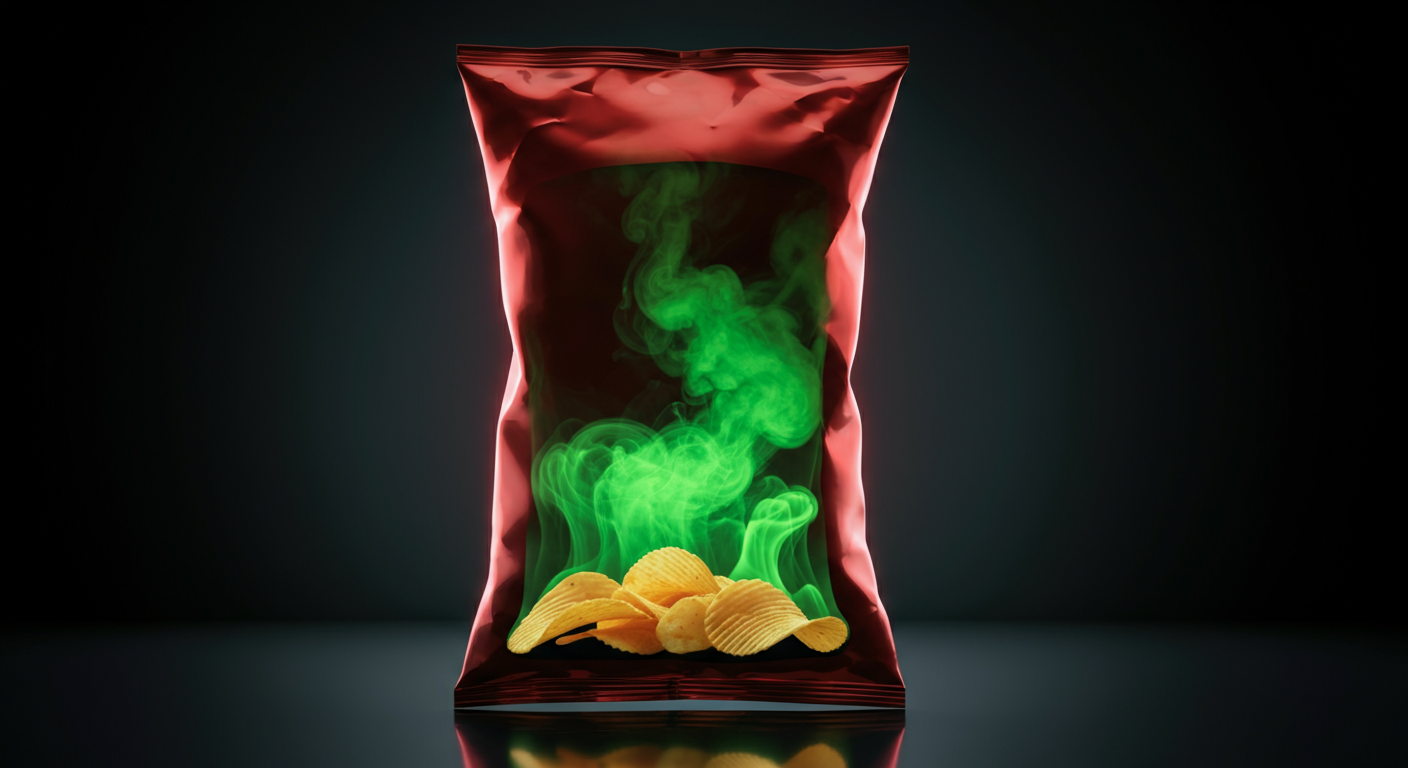
You aren’t imagining it. That bag of Doritos feels lighter because a specific algorithm decided exactly how much lighter it could get before you stopped buying it.
This isn't just inflation; it is neurological warfare. Edgar Dworsky, the founder of Consumer World who has tracked package downsizing for decades, calls this the "golden era of the grocery gaslight." But the shrinking isn't random. It is orchestrated by Revenue Growth Management (RGM) teams using a principle called the Weber-Fechner Law.
This 19th-century psychophysics formula calculates the "Just Noticeable Difference" (JND)—the precise threshold where a weight reduction becomes perceptible to the human hand and eye. If they remove 4% of the chips, your brain misses it. If they remove 5%, you riot. They know the number down to the decimal.
They have the software to trick your senses. We built the 'Grocery Gaslight' Index to expose the math behind the manipulation.
The Weber-Fechner Protocol: Why You Can’t Spot the Scam
Stop blaming the supply chain for your shrinking grocery haul. That 1.5-ounce reduction in your detergent wasn't a logistical accident. It was a calculated move by Revenue Growth Management (RGM) teams running Price-Pack Architecture (PPA) simulations.
ð Key Takeaways
- The Weber-Fechner Protocol: Why You Can’t Spot the Scam
- Algorithms of Deception: How the Sausage Gets (Un)Made
- Insider Moves Most People Miss
Corporations apply the Weber-Fechner Law to calculate the "Just Noticeable Difference" (JND). This formula (k = ΔI/I) tells them exactly how much weight they can shave off—down to the gram—before the average human brain registers the change. If the threshold is 7%, they will cut 6.8% and keep the price tag identical.
The numbers prove this isn't about survival. The Groundwork Collaborative reported that corporate profits accounted for 53% of inflation during the second and third quarters of 2023. You aren't paying for higher wheat prices; you are paying for the algorithm that decided you wouldn't notice five missing crackers. As Senator Bob Casey put it in his "Greedflation" reports, this is price-gouging dressed up as economics.
Algorithms of Deception: How the Sausage Gets (Un)Made
While the Consumer Price Index (CPI) tracks sticker prices, it often lags behind the "hidden" inflation of size reduction. The Grocery Gaslight Index fills that gap by exposing the software stack automating this theft. Platforms from vendors like SAP and NielsenIQ simulate millions of pricing scenarios to test Elasticity of Demand.
The execution is automated and ruthless. First, algorithms scrape real-time competitor pricing and Bureau of Labor Statistics (BLS) data to establish a baseline. Next, the system calculates the precise gram reduction that falls just below the JND threshold. Finally, engineers engage in "slack fill optimization," redesigning the packaging structure—such as increasing the divot in a jar's bottom or widening the air ratio in a bag—to maintain shelf presence despite the lower mass. It’s not about covering costs; it’s about training the consumer to accept less for more, one gram at a time.
Former Labor Secretary Robert Reich has pointed out that this power stems from massive industry consolidation. When a handful of conglomerates like PepsiCo control the aisle, they don't have to compete on value. They just have to agree on how much they can squeeze you.
Insider Moves Most People Miss
Corporations employ Price-Pack Architecture (PPA) software to calculate exactly how much they can shrink a product before your brain registers the change. Here is how you reverse-engineer their math and protect your wallet.
- Ignore the Sticker, Hunt the Unit Price. Revenue Growth Management teams bank on you scanning the bold price ($4.99). Your only defense is the tiny print in the corner (price per ounce). This is the only metric immune to packaging tricks and "new look" designs.
- Audit the "Net Weight Variance". Standard imperial weights (16oz, 32oz) are dying. If you see a standard 16oz jar quietly morph into a 14.5oz oddity, you’ve just spotted a "margin capture" event. Check Mouseprint.org to verify if that brand has a history of subtle downsizing.
- Watch for "Skimpflation". Sometimes the weight stays the same, but the ingredients get worse. If the calorie count drops but the weight doesn't, they likely swapped expensive fats or cocoa for cheaper oil and fillers.
ð Worth Noting: " But the shrinking isn't random