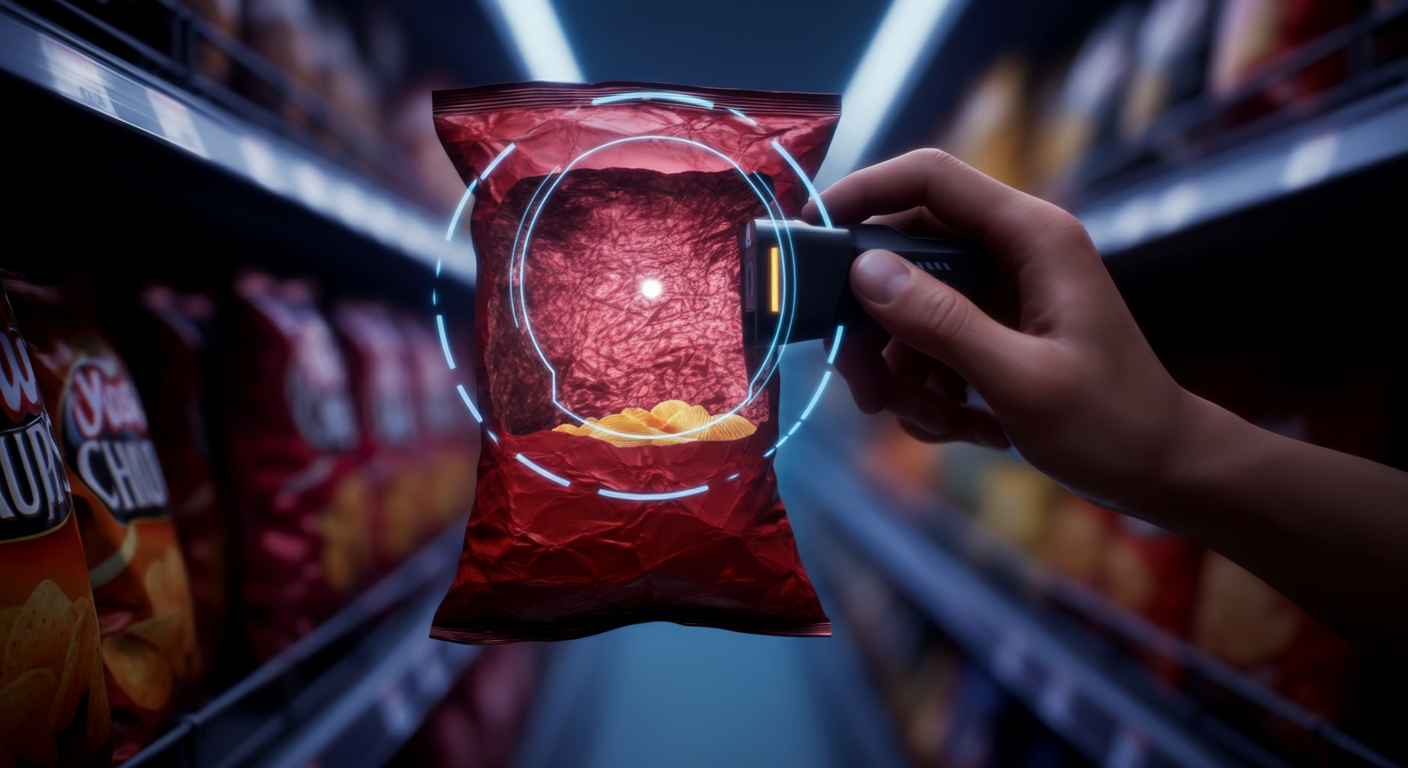
Your favorite chips didn't just get lighter. They got worse.
According to a 2024 YouGov survey, 73% of consumers caught the shrinking package sizes. But nearly all of them missed the recipe degradation happening inside the bag. We stare at the weight, but weight is a decoy.
The real heist is "Skimpflation." Consumer advocate Edgar Dworsky has been screaming about this for years: brands quietly swapping high-quality ingredients for bottom-tier fillers while the price tag stays frozen. We found premium pasta sauces where water jumped from the fourth ingredient to the second. We found "chocolate" bars where expensive cocoa butter vanished, replaced by cheap vegetable fats.
The 'Grocery Gaslight' Detector exposes this invisible inflation. By cross-referencing historical product metadata from the Wayback Machine, this tool ignores the ounce count and optically scans for the recipe changes you can't see.
You aren't just losing volume. You are paying premium prices for a diluted product.
The Silent Theft: Beyond Shrinkflation Lies Skimpflation
While the internet screams about a bag of Doritos losing five chips, the real robbery happens in the fine print. We obsess over Shrinkflation—the reduction of net weight—but the nastier trend is Skimpflation.
ð Key Takeaways
- The Silent Theft: Beyond Shrinkflation Lies Skimpflation
- Forensic Ingredient Auditing: Beyond the Net Weight
- Insider Moves to Beat the Grocery Algorithms
Manufacturers are reformulating products to survive margin compression. A 2024 forensic analysis of popular frozen entrees revealed a 15% drop in protein content per 100g compared to 2021. The difference? More water, starch, and cheaper vegetable gums. You pay 2021 prices for a product that has chemically devolved.
"Companies know you check the price tag, and they suspect you might check the net weight. But they are banking on the fact that you will never memorize the ingredient list from two years ago," says Edgar Dworsky, founder of Consumer World.
The Bureau of Labor Statistics (BLS) Consumer Price Index is blind to this quality rot. When a sauce swaps extra virgin olive oil for soybean oil but keeps the price static, official inflation data registers zero change. In economic terms, the price is stable. In reality, the value collapsed. Manufacturers are testing the elasticity of demand not with price, but with nutrition.
Forensic Ingredient Auditing: Beyond the Net Weight
Reddit communities like r/shrinkflation do excellent work crowd-sourcing photos of smaller candy bars. But they miss the invisible thief. The Grocery Gaslight Detector pivots from a simple weight tracker to a reformulation engine.
The engine doesn't just look at the Net Weight. It scrapes cached product pages via the Wayback Machine and APIs like Open Food Facts to reconstruct the product's history. It acts as a time machine for your pantry.
When you upload a receipt, the system extracts UPCs via optical character recognition. It then retrieves the 2021 version of that UPC’s metadata to establish a quality baseline. It hunts for specific degradations, such as the "Oil Swap"—the silent migration from sunflower oil to cheaper palm or soybean oil—or the introduction of Cocoa Butter Equivalents (CBE) in chocolate, where vegetable fats simulate texture to cut costs.
Finally, it uses the Implicit Price Deflator to calculate the "real" price hike based on nutrient density loss. This often reveals a 15% effective inflation rate where the CPI reports only 3%. Senator Bob Casey’s 2023-2024 "Greedflation" reports called for transparency in corporate pricing; this tool provides the forensic evidence to back that up.
It quantifies Brand Loyalty Erosion. Customers aren't just imagining that their favorite frozen meals taste blander—the protein count per 100g has statistically dropped. Manufacturers are betting your palate is less sensitive than your wallet. This tool proves them wrong.
Insider Moves to Beat the Grocery Algorithms
ð Worth Noting: But nearly all of them missed the recipe degradation happening inside the bag
- Spot the "Oil Slide." Check the back of your favorite crackers. If premium sunflower or olive oil has been replaced by palm or soybean oil, you are looking at Skimpflation. You are paying a premium for a cheaper product.
- Audit the "Water Creep." Watch the position of "Water" on the ingredient list. If it moves from fourth to second, the recipe has been diluted to maintain volume without increasing weight.