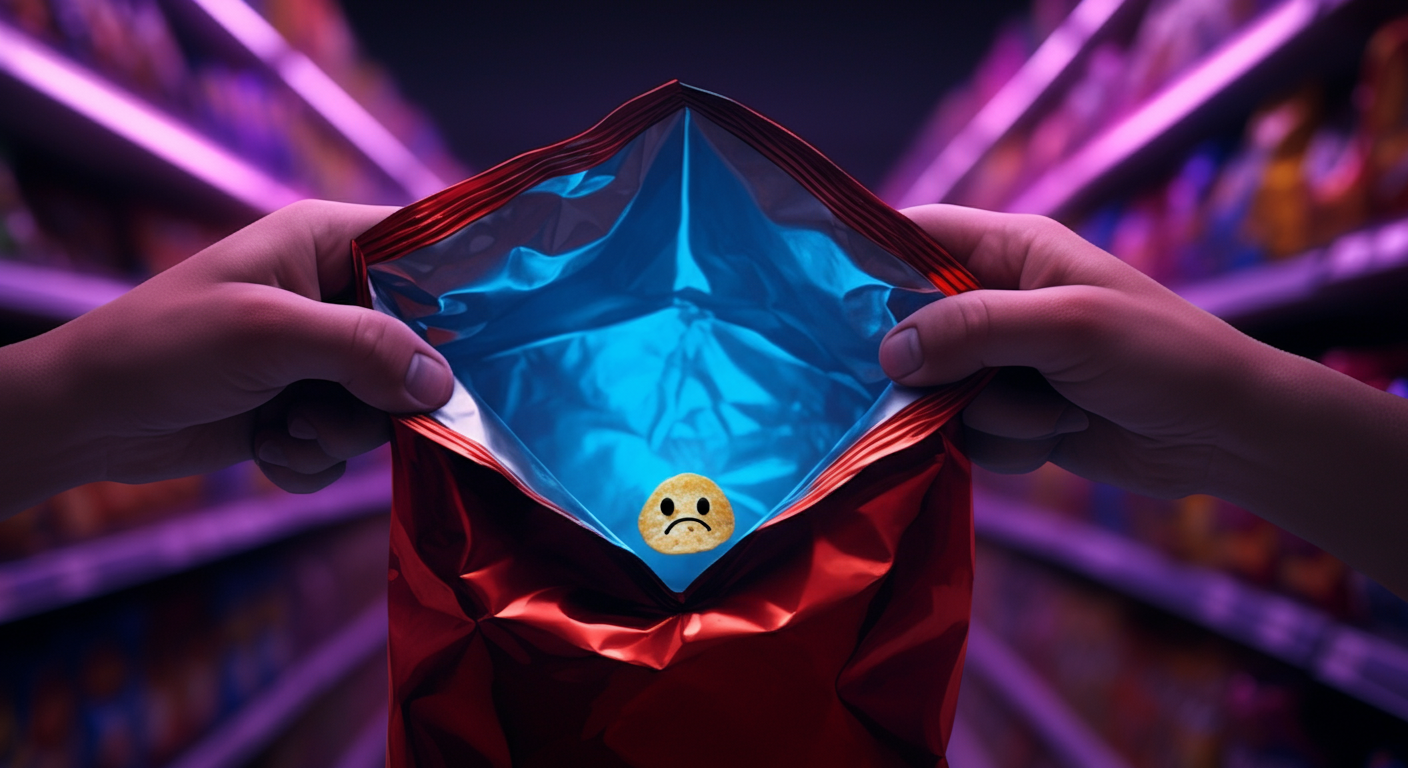
Upload your grocery receipt. We'll show you the 2019 price and make you cry. But the real damage isn't just in your wallet; it’s happening inside your oven.
Stop trusting "1 can" recipes. Shrinkflation is sabotaging dinner.
While the Bureau of Labor Statistics (BLS) watches the Food-at-home Index for price hikes, they miss the functional disaster happening in your kitchen. Your grandmother’s lasagna recipe relies on a specific ratio of liquid to solid. When "one can" silently drops from 14.5oz to 12oz, that ratio breaks. The chemistry fails.
Economist Pippa Malmgren coined "shrinkflation" to explain hidden costs, but she didn't predict the culinary chaos of the "Orphaned Ounce." This is the awkward, useless leftover amount you get when forced to buy two cans to meet a one-can requirement. The result isn't just a higher grocery bill. It is dry cakes, ruined casseroles, and a pantry full of waste.
The Death of the Standard Unit
Stop looking at the bottom line of your receipt. Look at the Net Weight in the bottom right corner of the packaging. That is where the theft is happening. For decades, the American kitchen operated on an unspoken contract: a "can" meant 14.5 ounces, and a "box" meant one pound. That contract is void.
ð Key Takeaways
- The Death of the Standard Unit
- Recipe Forensics: Why Your Cake is Dry
- Skimpflation: The Quality Drop
- How to Fight Back
When a legacy recipe calls for a 14.5-ounce can of diced tomatoes and the shelf now only stocks 12-ounce cylinders, you cannot simply buy one unit. You must buy two.
"Consumers are facing a 'utility gap.' To bridge the missing 2.5 ounces required for a standard family meal, they purchase a second unit, use a fraction of it, and often discard the rest. It is a hidden tax on functionality," notes Edgar Dworsky, the consumer advocate behind Consumer World.
This creates the "Orphaned Ounce" calculation. You pay for 24 ounces (two cans) to use 14.5, leaving 9.5 ounces of awkward spoilage. While the BLS tracks the price per pound, they ignore the cost of this forced waste. Giants like Mondelez International and PepsiCo know that demand for dinner is inelastic. They are betting you will buy the second box rather than starve.
Recipe Forensics: Why Your Cake is Dry
Manufacturers view Net Weight as a financial lever. To the home cook, weight is a structural requirement. When a brand shaves 1.5 ounces off a package, they aren't just raising the effective price; they are breaking the chemistry of 20th-century cookbooks.
Consider the math of the modern pantry:
- The Requirement: A standard 1990s recipe calls for one 14.5oz can of diced tomatoes.
- The Reality: Supply chain shifts reduce the standard shelf unit to 12oz.
- The Waste: The cook must purchase two cans (24oz total). After using 14.5oz, they are left with 9.5oz of spoilage.
- The Cost: The consumer pays a 100% premium to secure the missing 17% of the product.
This isn't an accident. It's a strategy relying on Elasticity of Demand. Companies know you are loyal to the brand but sensitive to the sticker price. If they raised the price of the 14.5oz can, you might switch brands. If they shrink the can to 12oz and keep the price the same, you likely won't notice until you're pouring it into the mixing bowl.
This practice has drawn government fire. Senator Bob Casey released a "Shrinkflation Report" highlighting this exact type of Greedflation, noting that corporations are hiding behind the excuse of Supply Chain Disruptions to pad margins while families struggle to put a meal on the table.
Skimpflation: The Quality Drop
It gets worse. Alongside shrinking sizes, we are seeing Skimpflation. This is where ingredients are reformulated—replacing expensive cocoa butter with cheap vegetable oils—degrading quality alongside quantity.
ð Worth Noting: But the real damage isn't just in your wallet; it’s happening inside your oven
According to Morning Consult (2024), over 50% of consumers have identified these shifts in pantry items. You aren't imagining it: the chocolate tastes waxier because it is waxier. The government records a 5% price hike, but you experience a 20% drop in utility and flavor.
How to Fight Back
Complaining on Twitter won't fix your lasagna. Here is how to handle the new grocery reality:
- Audit your legacy cookbooks. "One can" or "one package" is dead. Go through your recipes from 2010 and write the specific weight (e.g., 14.5oz) next to the ingredient. If you use a new 12oz can without adjusting the liquid ratios, you will ruin the bake.
- Master Unit Pricing. Ignore the big price tag. Look at the tiny print on the shelf tag for "Price Per Ounce." This is the only way to spot value manipulation.
- Use the "Safe List." Identify brands that explicitly cater to bakers and have refused to change their 16oz/1lb sizing. Stick to them, even if they cost cents more. Reliability is worth the premium.
- Weaponize Data. Use apps like Flipp to compare circulars instantly, or Ibotta to claw back cash on downsized items. If they shrink the product, make them pay you back.
""Consumers are facing a 'utility gap.' To bridge the missing 2.5 ounces required for a standard family meal, they purchase a second unit, use a fraction of it, and often discard..."